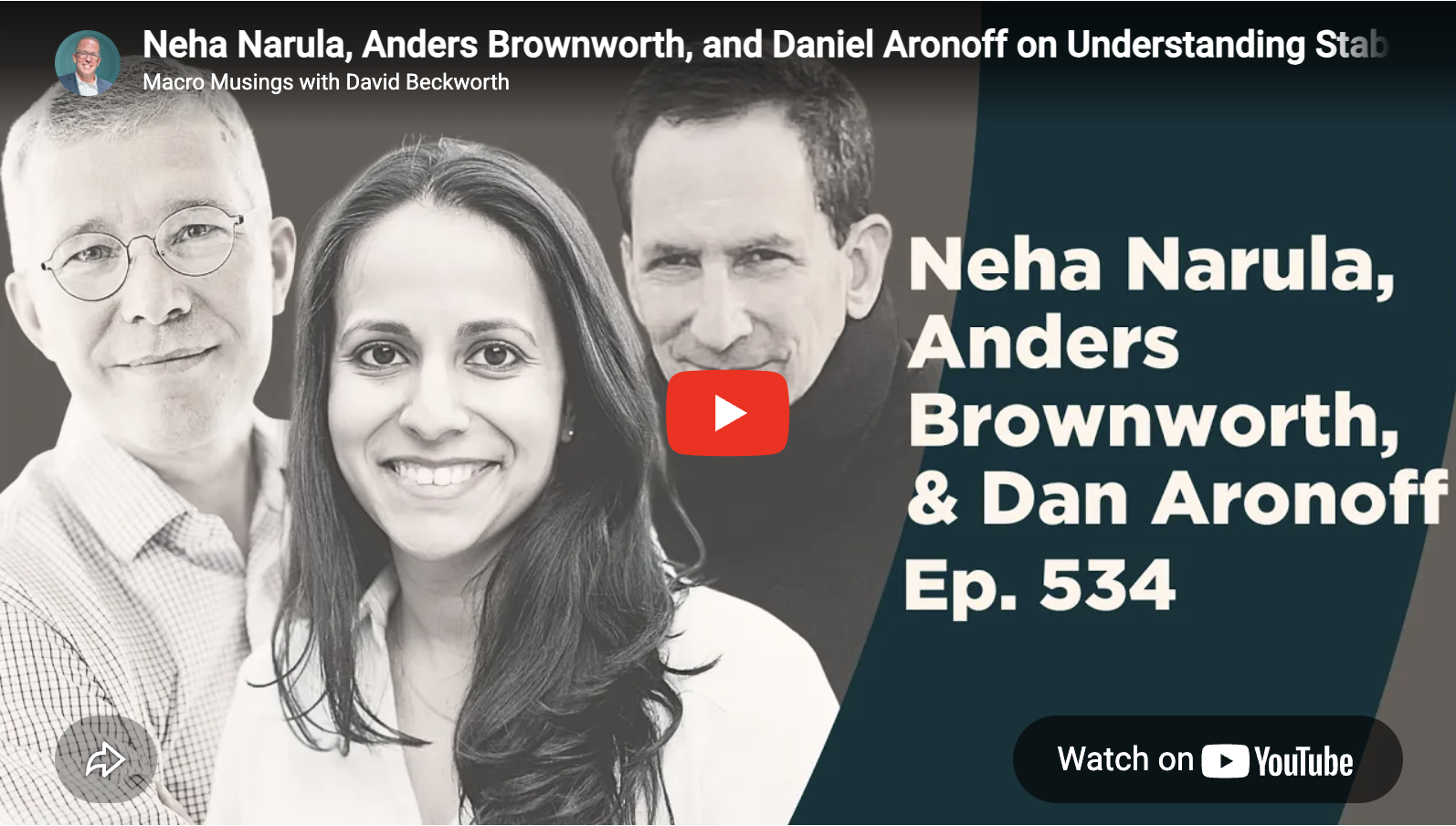
DCI appearance on podcast episode, speak about stablecoins
On March 16th, 2026, Neha Narula, Anders Brownworth, and Daniel Aronoff appeared on the Mercatus Center’s “Macro Musings” podcast with David Beckworth to discuss the DCI’s latest paper on stablecoins, The Hidden Plumbing of Stablecoins: Financial and Technological Risks in the GENIUS Act Era. “Neha Narula is the director of the Digital Currency Initiative which is based out of the Media Lab at MIT. Anders Brownworth is veteran software engineer in the crypto space and is a Senior Research Advisor at DCI. Daniel Aronoff is Research Affiliate in the MIT Department of Economics and a Collaborator at DCI. Neha, Anders, and Daniel join the show to discuss their work at DCI, the current state of stablecoins, their paper on the hidden plumbing of stablecoins, the basic mechanics of stablecoins, the technical and operational risks of stablecoins, the implications for the treasury market, interoperability between blockchains, and much more.”
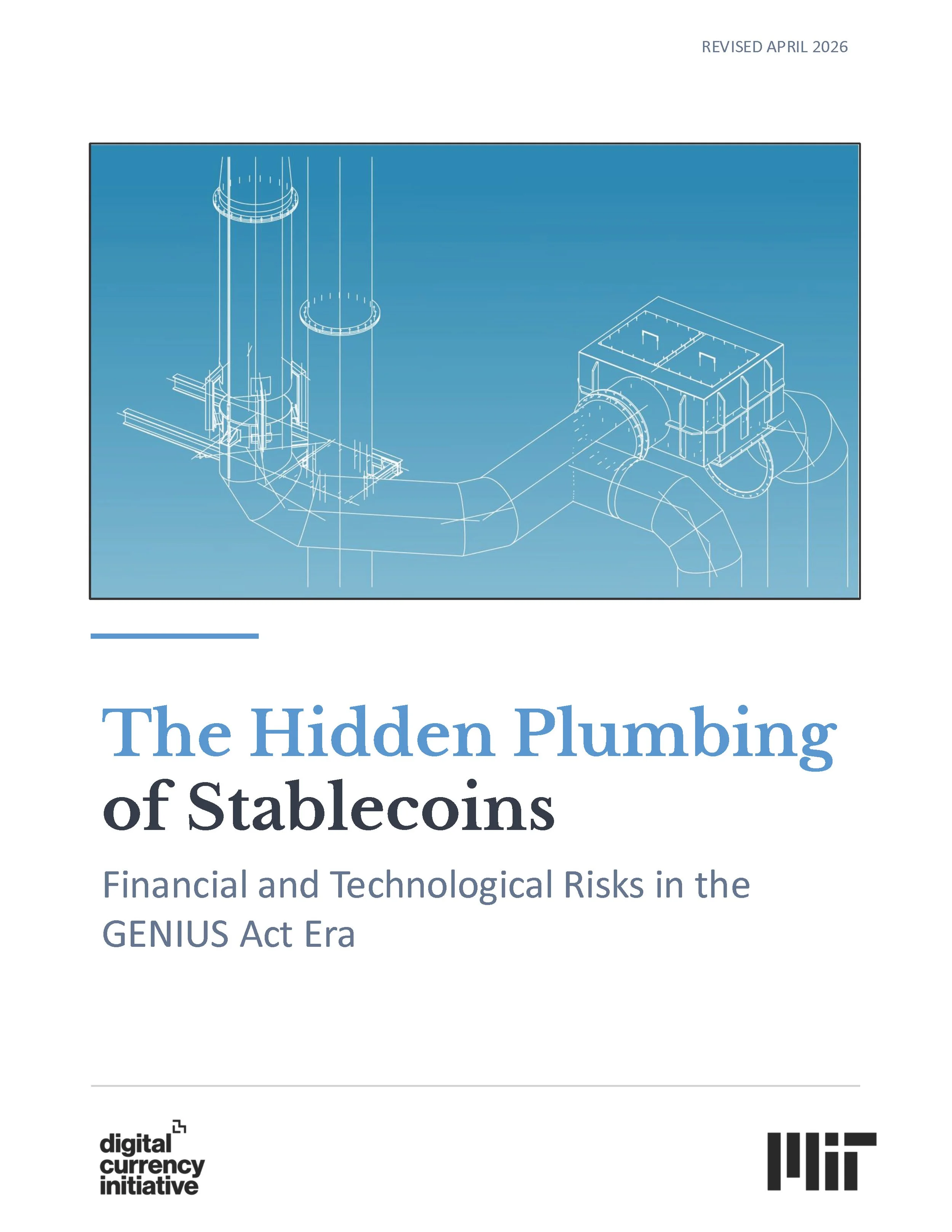
MIT DCI releases “The Hidden Plumbing of Stablecoins: Financial and Technological Risks in the GENIUS Act Era.”
U.S. dollar stablecoins are increasingly used as payment and settlement instruments beyond cryptocurrency markets. With the enactment of the GENIUS Act in 2025, the United States established the first comprehensive federal framework governing their issuance, backing, and supervision. This paper evaluates the financial, technological, and regulatory risks that may arise as GENIUS-compliant stablecoins scale into mainstream use.