
DCI Newsletter Issue #11 - Q4 2021+
In this issue:
The release of Project Hamilton, a collaboration between the Federal Reserve Bank of Boston and the DCI
Taproot activation, and recognition for AJ Towns as one of the most influential developers of 2021
The DCI is hiring a software engineer
The next issue of Cyptoeconomic Systems
MIT Bitcoin Club’s upcoming hackathon at Bitcoin EXPO (May 6-8)

DCI Newsletter Special Issue - Project Hamilton (FRBB<>MIT DCI)
Today, the MIT Digital Currency Initiative is releasing the phase one outputs of Project Hamilton, our multi-year research collaboration with the Federal Reserve Bank of Boston. Our release includes a technical paper, “A High Performance Payment Processing System Designed for Central Bank Digital Currencies,” and an open source codebase, OpenCBDC.
You can read more about the release in MIT News here.
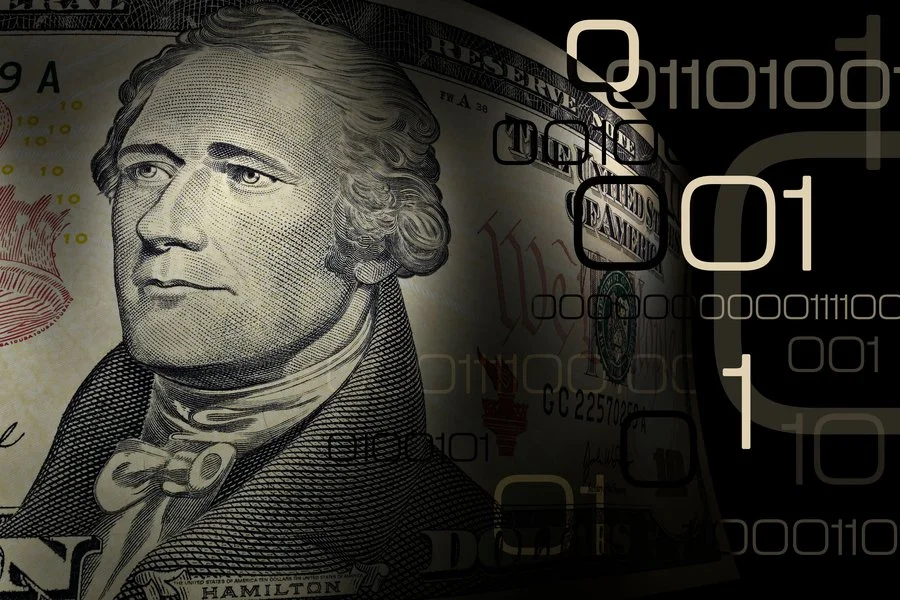
MIT DCI Releases Project Hamilton, OpenCBDC Papers and Open Source Code Base
Read the technical paper, A High Performance Payment Processing System Designed for Central Bank Digital Currencies, and executive summary here.
MIT News: "MIT experts test technical research for a hypothetical central bank digital currency"
Collaboration with Federal Reserve Bank of Boston yields progress in understanding how a digital currency might be developed in the future.
CAMBRIDGE, Mass. -- In collaboration with a team at the Federal Reserve Bank of Boston, MIT experts have begun designing and testing technical research through which further examination of a Central Bank Digital Currency (CBDC) can be performed in the U.S.
The effort, known as Project Hamilton, is in an exploratory phase, and the research is not intended as a pilot or for public deployment. Instead, the researchers have explored two different approaches that could be used to process transactions, and thus could indicate the technical feasibility of a potential CBDC model. In a process involving significant design flexibility, the MIT group tested factors such as the volume and speed of transactions, and the resilience of the systems in general, among other requirements for a viable digital currency.

AJ Towns listed as one of the "Most Influential 2021: The Developers Who Wrote Bitcoin’s Taproot Upgrade"
Nick along with A.J. Towns, Tim Ruffing and Pieter Wuille are the authors credited for writing the three BIPs that made up Taproot, the most significant Bitcoin upgrade in four years.

"Why Central Bank Digital Currencies?" in Federal Reserve Bank of New York's Liberty Street Economics
DCI Director Neha Narula co-authored the piece, "Why Central Bank Digital Currencies?" published in the Federal Reserve Bank of New York's Liberty Street Economics
“In the past year, a number of central banks have stepped up work on central bank digital currencies (CBDCs – see map). For central banks, are CBDCs just a defensive reaction to private-sector innovations in money, or are they an opportunity for the monetary system? In this post, we consider several long-standing goals of central banks in their support and provision of retail payments, why and how central banks tackle these issues, and where CBDCs fit into the array of potential solutions.”

DCI Newsletter Issue #10 - Q1,2,&3 2021
In this issue:
Announcing the new Bitcoin Security Initiative Lead!
New Issues of Cryptoeconomic Systems
View the 2021 MIT Bitcoin Expo presentations by the DCI
Blockchain Labs 2021 final reports
Join DCI and Maiden for the release of our first user-research report: Dec 2nd
Learn more about our open roles: Administrative Assistant and more

Joining MIT DCI to lead our Bitcoin Software and Security Effort
We’re excited to share that AJ Towns is joining the Digital Currency Initiative to lead our Bitcoin Software and Security Effort (please find his announcement below). This four-year research and development program is designed to continue to harden the Bitcoin network and steward the industry’s commitment to funding open source software. The effort will include contributing to Bitcoin Core development as well as longer-term research, such as investigations into the stability of rewards and software to provide strong robustness and correctness guarantees. It will also include attracting talent in network and operating system security, compilers, programming languages, testing, and more to join the effort.

CNBC's Dain Evans interviews Neha Narula for "China’s digital yuan could pose challenges to the U.S. dollar"
China is beating the U.S. when it comes to innovation in online money, posing challenges to the U.S. dollar’s status as the de facto monetary reserve. Nearly 80 countries — including China and the U.S. — are in the process of developing a CBDC, or Central Bank Digital Currency. It’s a form of money that’s regulated but exists entirely online. China has already launched its digital yuan to more than a million Chinese citizens, while the U.S. is still largely focused on research.
The two groups tasked with this research in the U.S., MIT’s Digital Currency Initiative and the Federal Reserve Bank of Boston, are parsing out what a digital currency might look like for Americans. Privacy is a major concern, so researchers and analysts are observing China’s digital yuan rollout.

"The Fed’s digital dollar could bring millions into the digital economy" by Quartz
Neha discussed her Subcommittee Hearing: Building A Stronger Financial System: Opportunities of a Central Bank Digital Currency on June 9th and DCI’s current collaborative CBDC project with the Federal Reserve Bank of Boston, with Scott Nover of Quartz.
DCI Team Members presented on an array of topics at the 2021 MIT Bitcoin Expo.
View the DCI presentation and fireside chats from the 2021 MIT BItcoin Expo here

The Block Crypto reviews the Cryptoeconomic Systems Journal
MIT’s Digital Currency Initiative has launched a new academic journal, called Cryptoeconomic Systems.
It’s a step toward a more robust academic dialogue around blockchain and crypto topics

Neha discusses N.F.T.s in "How Memes Become Money" by The New Yorker
DCI Director Neha Narula took part in The New Yorker’s “How Memes Become Money” discussion. Watch the highlight reel by clicking here.

"Still Getting Your Head Around Digital Currency? So Are Central Bankers." Talks with DCI's Neha Narula
If you are trying to grasp Bitcoin and understand what China’s digital yuan means, America’s Federal Reserve is right there with you.
America’s Federal Reserve says it is in no rush to issue a digital currency, but it is coming under intense and increasing pressure to research and understand the design and potential of digital money.

Market Watch's Chris Matthews presents "What a Fed-backed digital dollar means for the crypto revolution"
Chamber of Digital Commerce's Perianne Boring and Neha Narula of MIT Media Lab explain central-bank digital currencies and what their emergence means for crypto and fiat money.

"What is the Future of Money?" for Bloomberg Quint featuring Neha Narula
Neha Narula was interviewed for Bloomberg Quint on “What is the Future of Money?”. View the video below and read the full interview here

Forbes Names Papers by DCI's Madars Virza and Tadge Dryja as "Satoshi & Company: The 10 Most Important Scientific White Papers In Development Of Cryptocurrencies"
In an article by Forbes’s Nina Bambysheva on February 13th, 2021, Madars Virza’s paper “Zerocash: Decentralized Anonymous Payments from Bitcoin” and Tadge Dryja’s “The Bitcoin Lightning Network: Scalable Off-Chain Instant Payments” were named as one of “The 10 Most Important Scientific White Papers In Development Of Cryptocurrencies.

CNBC's "Why Central Banks Want To Get Into Digital Currencies" features an interview with DCI's Neha Narula
Intense interest in cryptocurrencies, like bitcoin, and the Covid-19 pandemic have sparked debate among central banks on whether they should issue digital currencies of their own. Advocates argue that central bank digital currencies, or CBDCs, can make cross-border transactions easier, promote financial inclusion, and provide payment system stability. Here's how central bank digital currencies could become the future of digital finance.

Bitcoin’s (un)common good
Digital Currency Initiative at the MIT Media Lab Launches New Bitcoin Software and Security Effort with Industry Leaders
Thanks to millions of open source developer hours over the past 12 years, and a burgeoning and supportive ecosystem, Bitcoin is no longer an obscure cryptographic toy. It is now an open-source financial network that secures on the order of $1T of value.
As the use of Bitcoin grows, and as it becomes more deeply embedded into our societies, the security of the network must grow and strengthen alongside it. Yet, as a common good, there is no one single Bitcoin protector or guardian to take on this formidable task. By design, there is no central command. And while this presents significant logistical challenges, it is also the distinguishing feature perhaps most unique to Bitcoin: no central point of failure. Bitcoin's nearly-uninterrupted operation over the years is a testament to the power of decentralization…
